

Every month I get messages from data analysts who dream of a career in data science similar to the one I developed over the last decade. They tend to split neatly into two groups: those who treat their professional development like a carefully designed problem to solve using evidence, and those who treat it like a late-night impulse purchase.
In the first group are people who have done their own research and formulated a solid hypothesis about what will get them their “dream job”: skills to develop, projects to add to their portfolio to become a stronger candidate, mentors to seek. Only then they’ll reach out to get my opinion: does it look like the plan they put in place might work? Are there any tweaks I’d recommend?
Typically I have no notes or just a few pieces of advice to improve the strategy of these evidence-hunters. (For example, narrowing down their focus to one area of expertise to develop their unique “|” shape strength.) Because they’ve already done their homework before asking for help, they’re already in the right path to achieve their goal.
But an alarming number of messages comes from people in the second group, the ones with a scattered, unfocused approach to developing their data science skills. Those tend to reach out only after they’ve invested significant amounts of time studying topics or pursuing certifications that won’t help them become an attractive candidate for the kinds of jobs they seek. I hate having to give them the bad news: you’ve just wasted months moving in the wrong direction, and now need to course-correct.
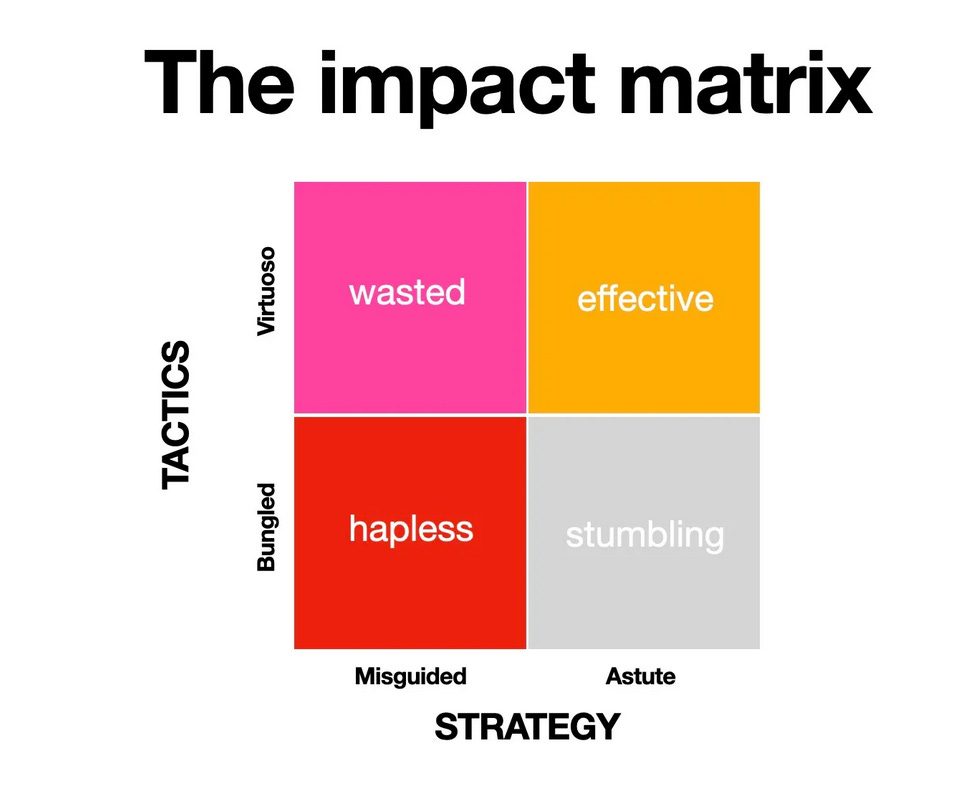
The impulsive learners from group 2 perfectly illustrate the saying, “The cobbler’s children have no shoes.” I wonder if they realize the irony of failing to apply an evidence-based approach to drive their own career choices while in pursuit of a job that’s primarily focused on asking, “What does the data say?”
The solution to avoid this pitfall is to evaluate your strategy (the what) and tactics (the how) of skill building with the same discipline you’d use for analyzing trends and patterns in data. And then keep adjusting your learning goals based on hard evidence rather than habit or hype.
For example, rather than assuming that more certifications will help you land your target job, check job postings, employer feedback, and market data to base your conclusion.
As Seth Godin says,
If you are showing up with skill and effort and executing perfectly, all in support of a strategy that doesn’t make sense, you’ve wasted your effort.
(You can learn more about how to customize your learning path and avoid the “career confusion” that afflicts many impulsive learners here: Finding your T-shaped strength.)
—
You may also like the follow-up: Great Decisions Start with Challenging Your Own Assumptions